Leadership Training for Managers, Supervisors & Teams
Equipping people with the skills that improve team performance, reduce conflict, and build psychologically safe and productive workplaces
Our Training Methodology
Structured, evidence-based training methods that close the gap between knowing and doing.
Research-Informed Curriculum
Every skill is grounded in validated leadership research and recognised workplace performance frameworks.
Structured Skills Practice
Skills are broken down into micro actions that can be easily practiced and assimilated into your work routine.
Workplace Application Focus
Skills are applied directly on the job each week and debriefed in the following session.
Flexible Delivery (In-Person or Virtual)
A blend of in-person and virtual training is flexible, consistent, and operationally practical.
Timely Support and Reminders
We harness our proprietary technology to deliver daily micro-prompts, reminders and challenges keep skills active between sessions.
Measurable Outcomes & Assessment
Baseline and progress assessments are used for both skills and program objectives to ensure outcomes.
Expected Organizational Outcomes
Improve employee retention and reduce management-related turnover
Reduce interpersonal conflict, HR escalations, and team dysfunction
Improve supervisory effectiveness as measured by 360-degree feedback scores
Increase team productivity linked to performance targets and milestone delivery
Strengthen cross-functional collaboration and reduce duplication and misalignment
Improve employee engagement scores
Build a stronger succession pipeline and develop the next generation of leaders
Reduce absenteeism and burnout attributable to improved leadership practice
Meet employer obligations under WorkSafeBC's Mental Health Strategy
Improve psychosocial risk factor indicators aligned with the National Standard of Canada for Psychological Health and Safety in the Workplace (CSA Z1003)
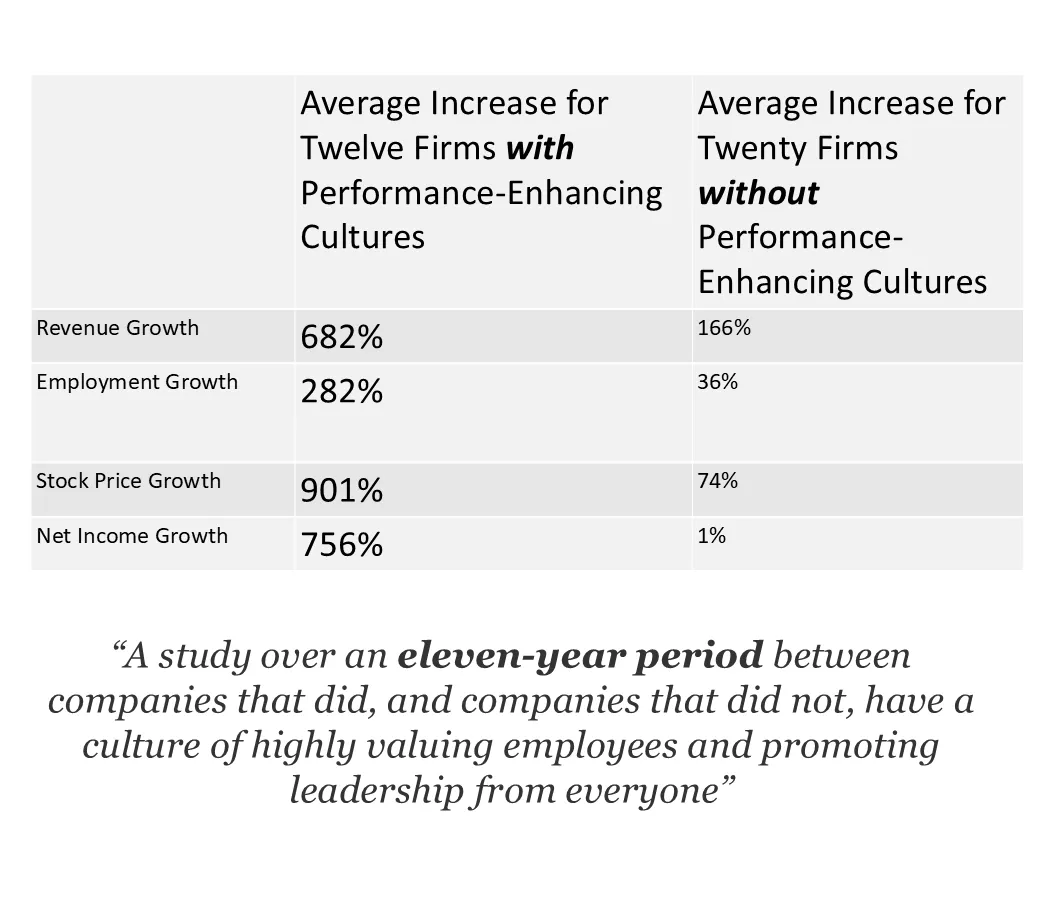
Consider This Study Conducted by Harvard Professors
Signature Training Programs
Turning complex ideas into simple actions so that outcomes improve from day one
The Inspiring Manager Program
The transition from top performer to team leader is one of the most challenging — and most critical — career moves in any organisation. The skills that made someone exceptional as an individual contributor are not the same skills that make them effective as a leader of people. Without the right training, even your best people can struggle to make that shift.
This program gives newly appointed and developing managers the essential workplace leadership skills they need to lead high-performing teams with confidence — from conducting difficult performance conversations and resolving conflict, to building psychological safety, setting clear expectations, and inspiring genuine commitment from the people they lead.
Organisations that invest in structured management training see the results where it matters most: lower unwanted turnover, stronger employee engagement, reduced workplace conflict, and teams that consistently deliver.
Team Wellness Leadership Program
Workplaces where people feel psychologically safe are more productive, more innovative, and significantly better at retaining their best people. This program equips employees at every level with the practical interpersonal skills needed to build and sustain that kind of workplace — not as a policy initiative, but as a lived daily experience.
Participants develop the communication, trust-building, and conflict navigation skills that turn a group of individuals into a genuinely high-functioning team — one where people speak up, support each other's success, resolve disagreements constructively, and show up engaged rather than just present.
The result is a workplace people actually want to come to — and stay at.
Past Clients In Multiple Industries
Construction - Professional Services - Healthcare - Government - Not For Profit


About Psychological Safe Leadership
The National Standard of Canada for Psychological Health and Safety in the Workplace, widely known as CSA Z1003, was officially launched on January 16, 2013.
It focuses on 5 key areas.
Communication and Collaboration: Providing clear, transparent, and respectful exchange of information that involves employees in ongoing conversations.
Social Intelligence: Demonstrating supportive and inclusive interactions, particularly during stressful periods.
Problem Solving and Conflict Management: Leading solution-focused approaches to challenges in a timely and safe manner.
Fairness and Integrity: Ensuring all decision-making is unbiased, consistent, and respectful of diverse employee needs.
Security and Safety: Actively protecting team members from bullying, harassment, and reckless psychological harm.
Although this is currently a voluntary standard, it is prudent for organizations to ensure their leaders and managers act in accordnace with the standard. It is what OHS uses as a reference for any workplace
What Client's Are Saying
“Rnold played an integral role in helping me grow my firm to one of the most successful real estate law firms in the province. He not only helped to fuel the rapid growth of my firm but also helped install the systems and protocols that have enabled us to deliver a better service for less money. My team is able to be more productive than other firms in large part because of the systems and culture that he championed and that we created and implemented together. He is a trusted advisor for me and my team and I highly recommend his services if you are interested in happy, productive employees.”
Liam Kearns - Founding Partner of Kearns & Company
“Rnold worked with me and my team just after a merger with a large US firm. Our team composition was now made up of both companies. I wanted a way to create more cohesion for the team and improve communication. Rnold’s program helped the team elevate how they felt about each other and even resolved some lingering conflicts between one of my senior managers and her new team. If you are looking to boost the morale and performance of your team, I can highly recommend Rnold and the Team Wellness Leadership Program.”
George Young - VP of Technology
Rnold has helped me navigate one of the most challenging and complicated times of my life. When I started coaching with Rnold I was completely overwhelmed and just felt like quitting. I was navigating a separation agreement, in the process of putting my business up for sale and dealing with 3 of my key staff members all leaving within one week. After the very first call I felt better about my future and we created a specific action plan for dealing with what was most urgent. Now after 3 months I have an offer for my business which was over $100,000 higher than the professional valuation, I have the right team in place for my business and a clear strategy for getting a fair settlement with my ex-husband. I can’t thank Rnold enough for his continued support.
Jennifer French - Business Owner (name changed for privacy)